labor from $208 · $95 service visit · parts itemized on their own signed line
Sound familiar?
The Complaints That Book This Page
Runs hot then trips offClothes damp after a full cycleThumping or screeching drumWon't start, lights deadBurning smell on long loadsStops mid-cycle without a code
How the visit actually runs
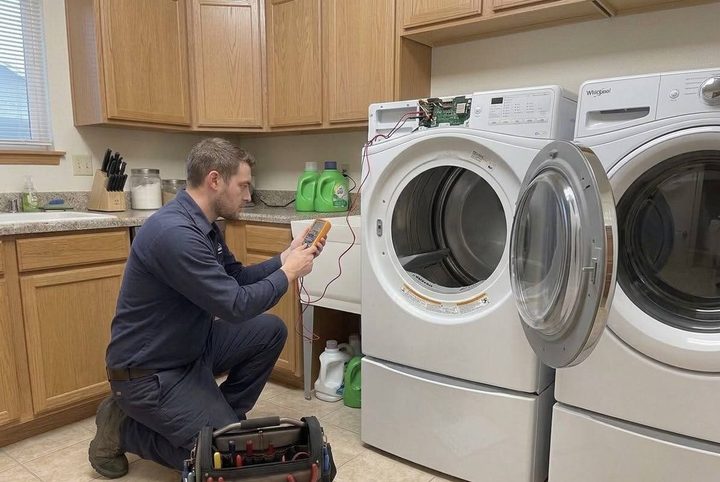
A dryer is the simplest machine in the laundry pair, which is exactly why it deserves instruments instead of folklore. The visit opens with the exhaust gauge, because a blocked run mimics half the faults in the book — weak heat, long cycles, tripped safeties — and costs the least to cure. Only when the airflow number reads clean does suspicion move inside the cabinet.
From there the sequence is fixed: heat circuit metered end to end, drive train turned by hand, drum rollers and idler inspected under load. The fault gets a name and your figure goes in writing — labor from the published rate, the part on its own line at its own price. Approve it and most dryers finish the same visit; decline it and the reading you paid for is yours to keep.
The readings we take
Static pressure at the exhaustTells us in two minutes whether the vent run — not the dryer — is strangling the heat.
Thermostat & cutout continuityEvery safety on the heat circuit gets metered; a tripped cutout is a clue, not a conclusion.
Amp draw on the motorA tired motor announces itself on the clamp meter long before it seizes.
The code desk
Codes This Machine Likes to Show
Every machine family keeps favorite complaints. These are the characters this one shows most — and what they usually turn out to mean once the meter weighs in.
AF
Airflow flagThe machine itself says the duct is choked — we verify with a gauge, then clear or quote.
F01
Control faultSometimes a board, often a harness — the meter decides before the expensive guess.
PF
Power interruptionPoints at the outlet and cord, and the fix may belong to the circuit, not the dryer.
A different code on your display? Read it to the workshop — it goes straight into the visit plan.
Worth knowing
Owner Notes From the Bench
Clean the screen, but don't stop there
A clear lint screen with a clogged duct behind it is the commonest false comfort in the category. If cycles are stretching, the run needs a gauge, not another screen rinse.
Listen for the first thirty seconds
Rollers and belts complain loudest from a cold start. A phone recording of that first half minute often narrows the visit before the van leaves the shop.
Mind the gas smell rule
A gas dryer that smells of anything unusual comes off the wall and stays off until it's checked. That call costs nothing to make and everything to skip.
Behind the bench
What the instruments see on a dryer call
The gauge goes on before the screwdriver
Exhaust static pressure is a thirty-second reading that settles the biggest question first: is this a dryer problem or a duct problem? Every heat complaint gets that number logged before a single panel comes off, because the cheapest fix in the category lives outside the machine.
Safeties are witnesses, not culprits
A tripped thermal cutout gets replaced by half the trade and investigated by this one. The cutout tripped for a reason — restricted airflow, a lazy cycling thermostat, a heater grounding out — and installing a fresh one without the why guarantees a repeat performance.
The visit ends under load
A dryer that passes empty can still fail at minute forty under towels. The last reading is a genuine cycle with weight in the drum and the exhaust flap watched — an extra quarter hour that keeps the callback rate embarrassingly low.
Asked often
Questions This Page Gets
Why does my dryer heat but still leave clothes damp?
Heat without drying is an evaporation problem, and evaporation needs airflow. The exhaust gauge usually finds a run pinched behind the machine or packed at the outside flap — cured without a single part.
Is a squealing drum urgent?
It's a wear item announcing itself early — rollers, idler or glides. Caught at the squeal stage it's routine; run to the grind stage it can score the drum and raise the bill.
Do you work on both gas and electric dryers?
Both, daily. The heat sources differ; the airflow and drive logic are the same physics, and the instruments cover both.
What does the visit cost if the dryer turns out to be fine?
The $95 covers the readings wherever they lead. If the verdict is a duct problem or an outlet problem rather than a dryer problem, you'll hear that plainly — with the numbers to prove it.