A north Bellingham workshop that treats every broken dryer, washer, fridge or range as a measurement problem: test first, name the fault, put the figure in writing, then fix it.
No heat, marathon cycles, thermal cutouts, drum noise — airflow measured before parts get blamed.
See the method →Won't drain, won't spin, walks the floor, throws a code — the code gets read, not reset.
See the method →Warm shelves, frost walls, water underneath — temperatures logged, then the verdict.
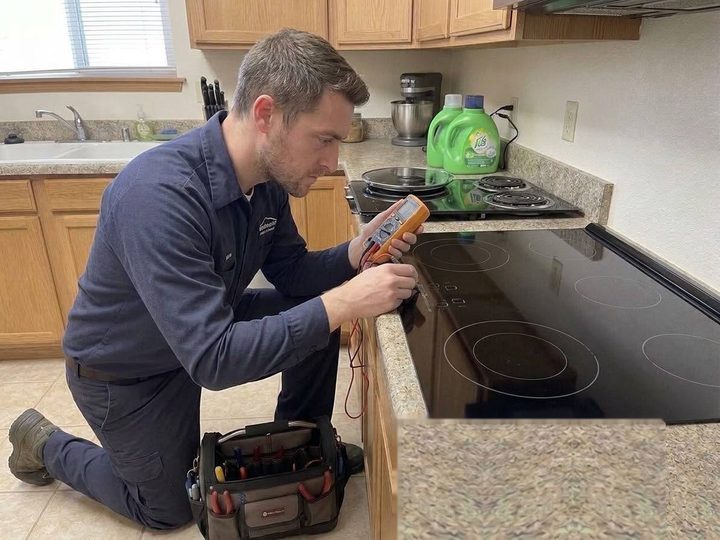
See the method →Cold burners, drifting ovens, F-codes — supply proven first, the machine judged second.
See the method →Standing water, cloudy glasses, mid-cycle stops — the sump tells the story first.
See the method →No ice, hollow cubes, jammed augers — one full cycle observed before anything is swapped.
See the method →From-rates are labor only and start at the figure shown; parts are always a separate, itemized line you sign before ordering.
Modern appliances announce their own faults in two or three characters. Tell us the code when you call — it sorts the visit, loads the right parts in the van, and often shortens the whole job.
No code on the display? The symptoms speak just as clearly. Ring the workshop and describe what you see.
Call or send the form — the intake asks the questions a technician actually needs, code included.
The $95 visit runs the tests: supply, sensors, mechanics. The fault gets a name, not a guess.
Labor from-rate plus parts on their own line — signed before anything is ordered or opened further.
The repair ends the way it began: with a measurement that proves the machine is back in spec.
Airport-side streets on the same honest arrangement — no distance math, ever.
The young stock — warranty checked free before any instrument comes out.
Lofts, condos and century bungalows — every era answers to the same meter.
The brick district and the hill above it — old kitchens measured with respect.
The lake road — outage-week electronics proven at the cheap end first.
The university hill and its valley — rental machines metered without prejudice.
The park side — shade-damp contacts checked before any board takes blame.
The repair-first streets — veterans kept in spec on evidence, not sentiment.
View-street built-ins and old-grid veterans — opposite machines, one method.
The valley run east — farm kitchens and river-town machines, instruments aboard.
The gated lake hillside — outage-stressed controls read before they're replaced.
Most appliance repair goes wrong at the first minute, when somebody decides what's broken before measuring anything. This workshop was set up against that habit. Every visit starts with instruments — supply voltage, sensor resistance, airflow, temperature — and only when the numbers agree does a part get named.
That's also why the figure you sign holds. It isn't a hope; it's a conclusion. Labor starts from the published from-rate for the job, parts sit on their own line at their own price, and the total you approve is the total you pay.
Ring the workshop or send the form — the callback comes with a window, and the visit comes with instruments.