A warming fridge is triaged the day you call, and the visit starts with thermometers in both compartments — because the pattern of the numbers names the suspect.
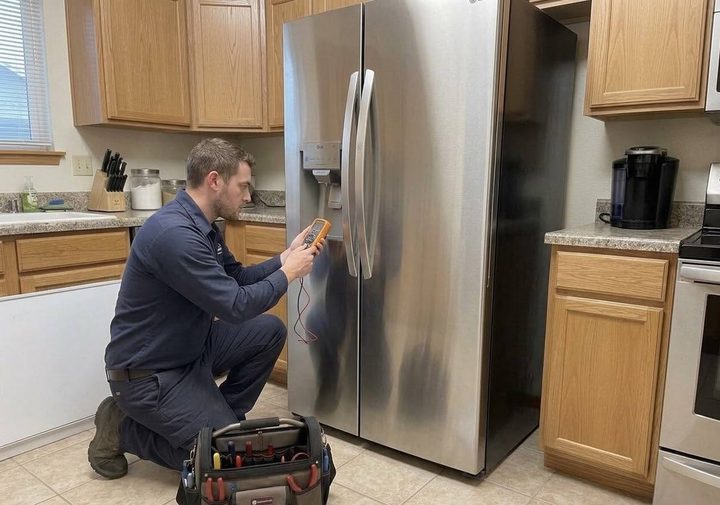
Refrigeration faults sort into a short ladder, and the ladder is climbed in order: airflow and gaskets, then defrost, then fans and sensors, and only at the top the compressor conversation. Each rung is a measurement — a temperature split, a resistance value, an amp draw — taken openly, so you can watch the case against your machine build or collapse in real time.
The triage begins on the phone: keep the doors shut, and a full freezer buys more hours than people fear. On site, most 'dead fridge' calls end at the cheap end of the ladder — a relay, a fan, a heater — and the written figure reflects that. When the fault is truly the sealed system in an old cabinet, the verdict is delivered straight, with the arithmetic and the alternatives, and the visit fee covers the knowledge either way.
Every machine family keeps favorite complaints. These are the characters this one shows most — and what they usually turn out to mean once the meter weighs in.
A different code on your display? Read it to the workshop — it goes straight into the visit plan.
The click is evidence. Repeated hard restarts stress a compressor that may be innocent — leave the rhythm running and describe it when you call.
Dust-choked coils force longer run times and earlier failures. Ten minutes with a vacuum is the cheapest refrigeration service that exists.
Frozen mass holds cold. During a fault or a power cut, resist the door and the freezer defends itself for many hours.
Gaskets and airflow, defrost, fans and sensors, compressor — each rung is a reading taken where you can watch it. Most households have never seen their machine's case built openly, and most verdicts land two rungs cheaper than feared.
Click-and-silence is the most misdiagnosed rhythm in refrigeration. The clamp meter separates a failing start relay — modest money — from a genuinely locked compressor, and it does it in minutes rather than by anecdote.
After the power blinks, the calls cluster: controls confused, relays stressed, defrost clocks off pattern. Post-outage visits start at the electronic small parts on purpose, because that's where the affordable answers concentrate.
It's the classic split, and it usually means air isn't moving between compartments: an iced evaporator or a stalled fan. Both live on the affordable half of the ladder.
Warming cold takes the first open slot on the route — it's the one emergency in this trade where hours genuinely matter, and the book is built to respect that.
Almost always — heater, thermostat or control. The meter confirms which link failed, and the fix is routine. Chipping the ice yourself, for the record, risks the lining.
When the sealed system fails in a cabinet past its arithmetic. That verdict comes in writing with the reasoning attached, and what you do next is advice, never pressure.
Yes — the built-ins are a bench specialty. Sub-Zero's dual-compressor cabinets reward exactly this kind of measured diagnosis, and their owners get the same written figures as everyone else, with parts sourced through the proper channels.
One call books the readings; one written figure follows them. The decision after that is entirely yours.