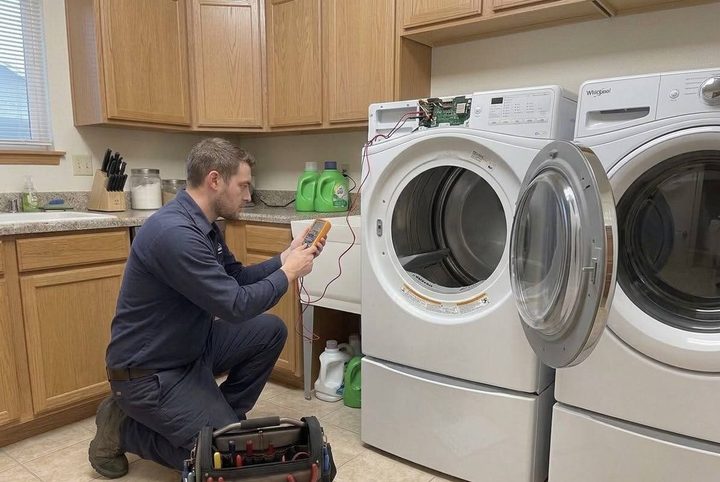
$95 service visit · ZIP 98229 · same written-figure arrangement as every street on the book
The neighborhood
How Samish & Puget Books, Breaks and Gets Fixed
Samish and Puget households plan in decades: houses held long, vehicles maintained rather than traded, machines expected to earn their keep well past their warranties. The bench method matches that horizon with its most useful product — the remaining-life estimate. Every figure written up here comes with an honest instrumented read on what the machine has left, so repair decisions run on two numbers instead of one.
The geography adds texture the intake call collects: hill drives that earn candid winter windows, Padden-side basements that run cool and damp, garage freezers loaded by trail-season ambitions. None of it reaches an invoice — the readings price the work, and the hill's grades stay a scheduling fact rather than a fee.
Two numbers per verdict
The figure says what the fix costs; the estimate says what the machine has left. Hill households decide on both — as they should.
Padden-side damp gets the first look
Basements under the firs meet moisture the ridge never sees. Contacts get proven before electronics take blame — cheap, decisive, routine.
Flats and ridge, one run
Puget's grid and Samish's grades ride the same route at the same terms. Elevation is scenery, not a surcharge.
The map pins
Where Exactly the Van Goes in Samish & Puget
Streets on the weekly routeSamish Way, 40th St, Puget St, Consolidation Ave and the grades between the flats and the ridge.
Landmarks we navigate byLake Padden's park, the Samish Way corridor, the trailheads east — the hill's daily markers.
ZIP codes covered98229 across the hill and the flats.
From the workshopDown Lakeway and up Samish Way from the bench — a standard cross-town run.
Every figure up here pairs with a remaining-life estimate, because hill households plan in years. Two numbers, one honest decision.
Padden's damp, priced at zero
The lakeside firs keep basements moist and the corrosion check keeps verdicts cheap. Climate is a diagnostic input, not a surcharge.
Asked around Samish & Puget
Neighborhood Questions
My twenty-year-old machine still runs — worth maintaining?
Let the readings say. Clean values on an old machine are a green light; failing values get you an honest retirement conversation with numbers attached.
Do icy hill weeks delay visits?
They make windows honest rather than heroic — you'll know the evening before, and the window will hold.
Is the Puget neighborhood covered too, not just the hill?
Fully — the flats ride the same run as the ridge, same instruments, same written figures.
A Samish & Puget machine acting up?
The route already runs your streets. One call adds your address to it — with a window you can plan around.