Under every dishwasher filter sits an archive — seeds, labels, a shard of glass — that explains more failures than any board. The visit starts there.
Dishwashers are judged unfairly because their commonest crimes are committed by their plumbing. A machine that drains into a blocked air gap, or fills from a long pipe that delivers lukewarm water, will wash badly for years while taking all the blame. The bench method opens the case at the sump, checks the intake temperature, and walks the drain path — because the real remedy frequently belongs to the plumbing, not to anything behind the toe-kick.
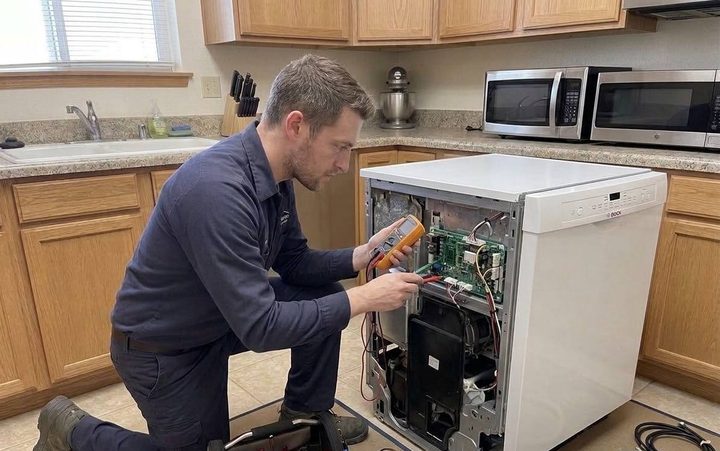
When the machine itself is at fault, the electronics are questioned last, and only by meter: pumps, valves, heaters and switches all stand trial first, because the board is the most expensive suspect and therefore the least convenient conviction. The figure you approve is written before panels close — from-rate labor, parts itemized — and and when the filter turns out to be the whole story, the job closes inside the visit fee, full stop.
Every machine family keeps favorite complaints. These are the characters this one shows most — and what they usually turn out to mean once the meter weighs in.
A different code on your display? Read it to the workshop — it goes straight into the visit plan.
A machine that fills with genuinely hot water washes visibly better. Ten seconds at the sink buys the first fill twenty degrees.
The archive under the filter grows quietly until it doesn't. A monthly rinse keeps the sump reading clean and the drain code away.
Etching from soft water plus too much detergent is permanent; film from hard water wipes off with vinegar. The distinction takes one test and changes the whole answer.
Seeds, glass, a label's worth of paper — the debris under the filter explains more dishwasher grief than any sensor. The excavation takes minutes, ends a pleasing share of visits outright, and always happens before electronics are suspected.
Air gaps, drain loops and long lukewarm supply runs commit crimes that dishwashers get blamed for. When the finding belongs to the sink side, it leaves as a written note for your plumber — not as an appliance part you didn't need.
The control board is the priciest suspect, so it testifies last and gets convicted only by meter. Cheap mechanical suspects clearing first is not slowness — it's the order that keeps written figures small.
A little water in the sump well is by design. A pool across the floor of the tub is a drain-path problem before it's a pump problem, and the path gets walked in order.
Water temperature or the heater circuit — E09's territory. The intake thermometer and one metered element settle it inside the visit fee.
No. A breaker that trips on the heat phase is protecting you from a real fault. Leave it off and book the reading.
Rarely. A door boot, a loose clamp or a perished hose covers most of them — and because the trace happens with panels off, the fix targets the source, not the symptom.
One call books the readings; one written figure follows them. The decision after that is entirely yours.