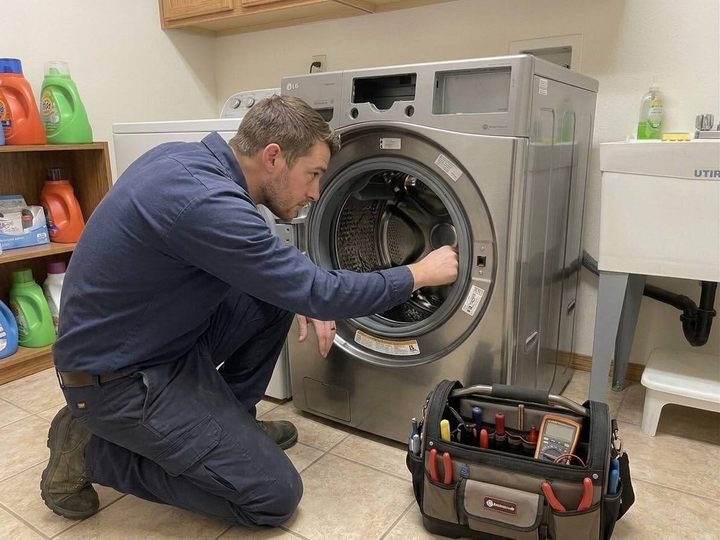
Machines around the university age in accelerated time: a shared-house washer runs six schedules a week, a rental dishwasher processes semesters like a small restaurant, and September hands every machine to strangers at once. The bench method refuses the usual shortcut — 'it's a rental, swap it' — and meters these machines like any others, because a hall sensor reading is just as true in a student house and a written figure serves a landlord's file even better than a homeowner's drawer.
The measured approach pays twice here. Tenants get faults named while they watch instead of verdicts pronounced over their heads; owners get readings on paper — amp draw, resistance values, the fault in plain words — that turn repair-or-replace into a two-minute decision made on evidence. August pre-turnover checks book the smart landlords a month ahead of the September rush, and the queue stays honest for everyone else.
Six-schedule machines, measured fairlyHard use isn't a diagnosis. A shared-house washer gets the same metered workup as any machine — and its real service age, not its birthday, drives the verdict.
Paper built for property filesEvery reading lands in writing that forwards cleanly — fault, values, figure. Managers run whole turnovers on those pages.
The arboretum's shade is a variableThe damp under Sehome's green slope reaches basement laundry. Contacts get proven before electronics take blame — same habit as the north side, same savings.