Ranges get a fair trial — supply first, machine second.

Half the accused ranges in this town are innocent: a tired outlet, a lazy breaker, a valve delivering less than it promises. The instruments sort the frame-up from the fault.

labor from $245 · $95 service visit · parts itemized on their own signed line
Sound familiar?

The Complaints That Book This Page

Burner won't light or heatOven drifts from the dialBakes uneven, back burntF-code on the displayIgniter glows but no flameElement dead on one side

How the visit actually runs

Cooking machines carry the oldest superstition in the trade: that a dead burner means a dead range. The bench method starts a step earlier, at the supply — outlet voltage under load for electric, valve delivery for gas — because the neighborhoods this workshop serves keep plenty of houses whose wiring predates their kitchens. A range convicted without a supply reading is a range framed.

Once the supply clears, the machine answers for itself: elements and terminals brightened and retested, igniters metered, sensors ridden through a genuine bake against a reference thermometer. The corroded-connection cure — unglamorous, fast, cheap — closes more of these visits than any part in the van. Whatever the verdict, it arrives in writing with the from-rate labor and the part on its own line, and vintage iron worth keeping gets sourced for patiently rather than talked into retirement.
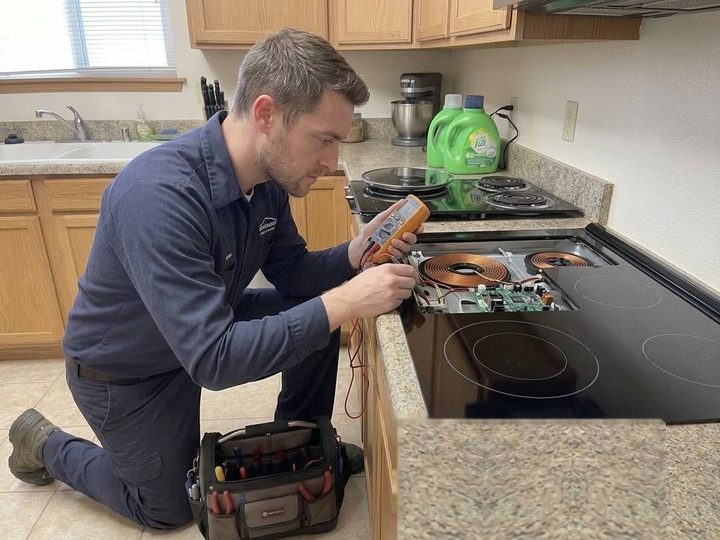
Technician testing induction cooktop coils with a multimeter

The readings we take

Voltage under load240 at rest can sag at the terminals under heat — the drop is measured, not assumed.
Oven climb & hold traceA checked thermometer rides a full preheat and hold; drift is charted before a sensor is blamed.
Igniter current drawA weak igniter reads weak on the meter long before it fails outright — gas ranges give fair warning.
The code desk

Codes This Machine Likes to Show

Every machine family keeps favorite complaints. These are the characters this one shows most — and what they usually turn out to mean once the meter weighs in.

F3
Sensor circuitOpen circuit at the probe or its harness — proven against a reference before condemnation.
F1
Control faultThe board suspects itself; the meter checks its story before the priciest part is ordered.
F9
Door lockA latch or switch out of position — mechanical more often than electronic, and priced accordingly.

A different code on your display? Read it to the workshop — it goes straight into the visit plan.

Worth knowing

Owner Notes From the Bench

Note which burners fail together

Two dead zones sharing one side of the cooktop point at a feed, not at two coincidental elements. That pattern, reported on the phone, sharpens the visit.

Trust a thermometer over the dial

Ovens drift honestly with age. A $10 oven thermometer tells you whether you're baking at the number you set — and gives the visit a head start.

Smell gas, skip the checklist

Any gas odor means stop, ventilate, and call the utility first. The range can wait; the rule can't.

Behind the bench

What the instruments see on a range call

Voltage sag is measured under real heat

An outlet can read a healthy 240 cold and sag hard once the elements draw. The under-load reading catches what the idle reading hides — and acquits a surprising number of accused ranges in older wiring.

The thermometer rides the whole bake

Drift accusations get tested with a reference thermometer through a full climb and hold, not a five-minute spot check. Ovens age honestly; sensors lie rarely; the trace shows which story this machine is telling.

Bright terminals close cheap cases

A corroded connection impersonates a dead element flawlessly and costs a fraction. Brightening and retesting terminals before ordering parts is the least glamorous habit on the bench — and the one that erases the most invoices.

Asked often

Questions This Page Gets

Why does my oven take forever to preheat?

A weakening element or igniter delivers heat slower every month, and the climb trace makes it obvious. Sometimes the answer is the supply sagging under load — which is why it's measured first.

Are F-codes on a range worth taking seriously?

Yes — as testimony, not verdict. The code names a circuit; the meter names the component. Skipping the second step is how boards get replaced for a $30 sensor's fault.

Can old ranges still get parts?

More often than the internet suggests. Switches, elements and igniters for well-built older ranges are still out there if someone bothers to hunt — and this bench enjoys the hunt.

Do you repair both gas and electric ranges?

Both, plus dual-fuel. The supply-first rule is the same; only the instruments change.

Can you handle Viking and Thermador ranges?

Yes, and gladly — professional-grade ranges are built to be serviced, which makes them a pleasure on this bench. Igniters, thermostats and modules for Viking and Thermador get sourced through their proper channels, and the written-figure rule holds at every price tier.

This route runs every stove, range & oven repair call on Bellingham's north side — Cordata, Birchwood, Meridian, King Mountain, Roosevelt and Alderwood — ZIP codes 98225 and 98226, out of the workshop at 541 E Kellogg Rd, Bellingham, WA. See the full map →

Ready to put the stove, range & oven repair question to rest?

One call books the readings; one written figure follows them. The decision after that is entirely yours.

Put It on the Bench

Two minutes of typing — the callback comes with a window and a plan.

The $95 service visit covers the full diagnosis. Repairs are quoted from a written figure — labor from-rates published, parts always itemized separately.