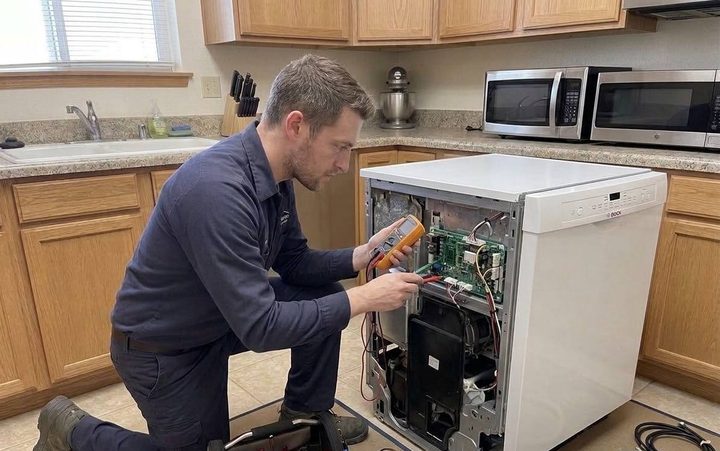
Downtown compresses the whole appliance century into a dozen blocks: compact European stacks in the lofts, builder suites in the newer condos, and out on the Lettered Streets the bungalow veterans that have outlived three remodels each. The bench method scales across all of it because instruments don't care about square footage — a condenser dryer's airflow reads on the same gauge as a farmhouse dryer's, and a 1960s range's terminals brighten the same way a new induction top's connectors reseat.
The buildings add their own logistics, and the intake call collects them: freight elevators with opinions, alley doors that beat lobby doors, strata rules about working hours. Planned at booking, none of it moves a figure — the written number covers the work, and downtown's geometry stays a scheduling note rather than a surcharge.
Compact machines, full-size instrumentsLoft stacks and slim dishwashers carry their own service logic and their own data tables. The van carries both — no surcharge for being European about laundry.
Building logistics, priced at zeroElevators, alleys, quiet hours — noted at booking, planned around, never on the invoice. Geometry is a fact, not a fee.
Bungalow circuits get the first lookThe Lettered grid's century wiring frames innocent machines weekly. Supply readings open every bungalow call — the grid's cheapest verdict.