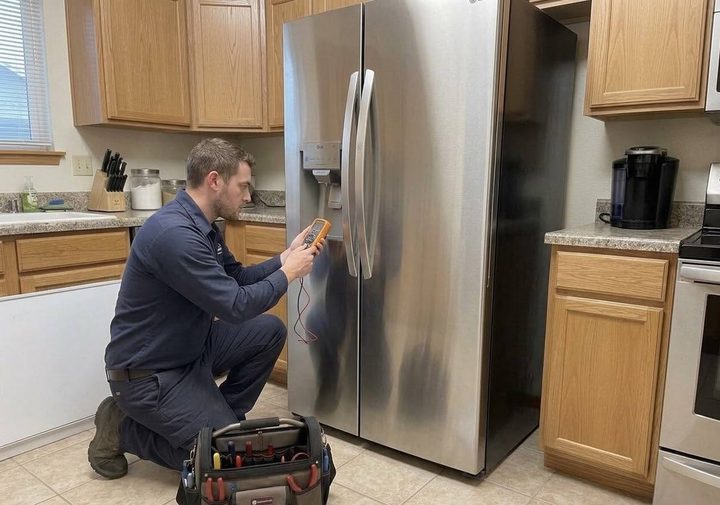
This pairing spans the whole trade: Edgemoor's bay-view kitchens run panel-front refrigeration and professional ranges that reward unhurried, data-driven service, while York's century grid keeps veterans that have outlived every trend since their installation. The instruments serve both without prejudice — a Sub-Zero's compressor draw and a 1975 range's element resistance are both just readings, and both convert into figures written before any work.
Each district gets its specific habits. Edgemoor visits book long, use factory service data and source parts through proper channels — no improvisation on machines worth more than the van. York visits open with the house itself: century wiring gets proven under load before any machine stands trial, because the old grid frames innocent appliances weekly, and the acquittal costs a reading rather than a board.
Premium stock, premium patiencePanel-front machines get slow hands and real data. Edgemoor's schedule slots run deliberately long — hurry is the enemy of built-ins.
The house testifies first in YorkLayered circuits from a century of remodels sag under modern loads. Supply readings open every old-grid call and regularly redirect the verdict to an electrician — in writing, at the visit figure.
Salt air on the view streetsWest-facing kitchens breathe bay air. The corrosion check leads every Edgemoor visit — coastal machines fail coastal ways first.