The fault can hide anywhere on a six-link chain from valve to ejector. Watching one complete freeze-and-release convicts the true link with evidence.
Ice makers punish impatience. The assembly is cheap enough that swapping it feels efficient — right up until the new module inherits the old fault, because the true culprit was the water pressure, the filter, the fill valve or a frozen line upstream. The bench method spends its first minutes on water: pressure at the valve, filter age, actual fill volume measured rather than eyeballed.
Only then does the maker itself perform, one complete cycle observed with the panel open. The link that fails on stage gets named, priced in writing and replaced — and the links that passed keep their jobs. Stale-tasting ice, for the record, is usually housekeeping rather than hardware, and when that's the truth the visit says so plainly instead of inventing a repair.
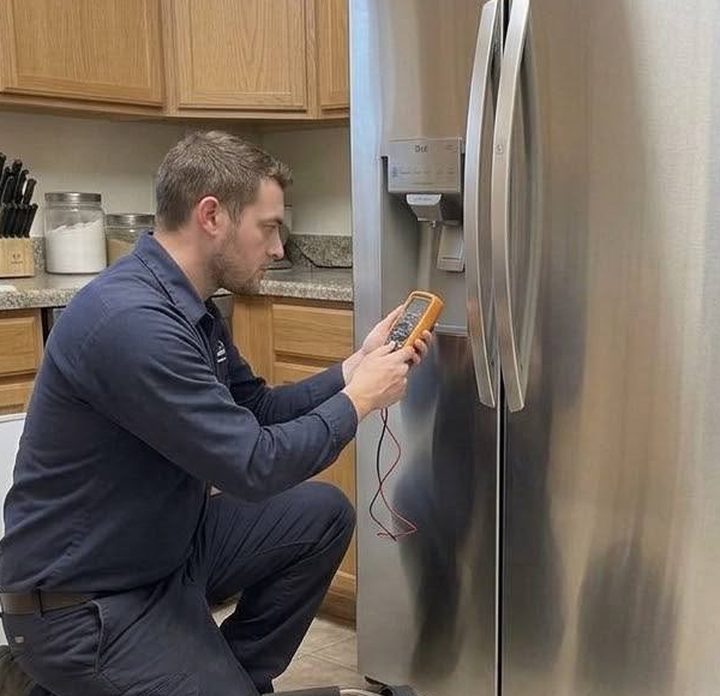
Every machine family keeps favorite complaints. These are the characters this one shows most — and what they usually turn out to mean once the meter weighs in.
A different code on your display? Read it to the workshop — it goes straight into the visit plan.
A marker note on the cartridge beats memory. Most 'weak ice' calls trace to a filter a year past its shift.
The first batch through a disturbed system carries sediment and old taste. Bin it without ceremony.
A maker that went silent in a January cold spell may need a thaw, not a part. Forcing the auger accomplishes nothing; the visit locates the frozen stretch and works out why it iced at all.
Pressure at the valve, filter age, actual cc's into the tray — the water side closes half these cases before the maker itself is doubted. Modules swapped on suspicion are this category's signature wasted money.
Freeze, harvest, eject — the full performance with the panel open. The failing link identifies itself on stage, and the links that pass keep their jobs and their prices off your figure.
Some cabinets route their fill lines through cold zones, so a shutdown during a cold snap is frequently ice rather than failure. Tracing that blockage — and the airflow quirk behind it — beats condemning an innocent assembly downstream.
Not before the water side is measured. A new module behind a starved supply fails exactly like the old one, and the reading that proves it costs less than the part.
Short fills — pressure, filter or valve. The fill volume measurement names which in one cycle.
Usually absorption and housekeeping: an open bin learns the freezer's smells. Empty it, wash it, give the filter a look, and allow two days. When that's the honest cure, it's the one you'll hear.
Yes — they're fussier about airflow and door seals than the freezer-mounted kind, which is why the fan and gasket readings come standard on those visits.
One call books the readings; one written figure follows them. The decision after that is entirely yours.