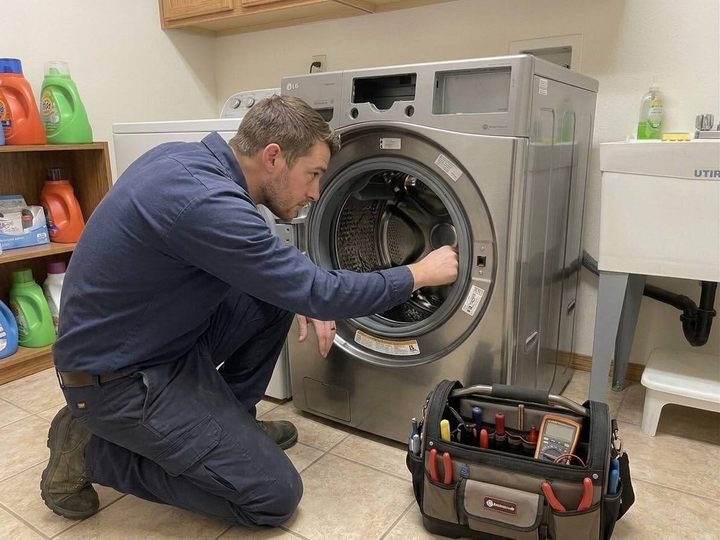
A neighborhood that repairs before it replaces gets a workshop that thinks the same way — readings first, figures in writing, and veteran machines treated with respect.
$95 service visit · ZIP 98225 · same written-figure arrangement as every street on the book
The neighborhood
How Birchwood Books, Breaks and Gets Fixed
Birchwood is a working neighborhood in the plainest sense: kitchens that cook daily, laundry that runs nightly, and a garage fridge holding the overflow. Machines here aren't showpieces — they're staff. When one goes down, the household feels it by dinnertime, and the repair has to hold up under real use, not showroom use.
The bench method suits that temperament. A Birchwood call often books two machines into one visit — the kitchen fridge and its garage colleague, or the washer and the dryer above it — and each gets its own readings and its own written line. The visit is shared; the diagnosis never is.
Garage fridges earn full service
Second refrigerators in unheated garages live a harder life — temperature swings, dust, spiders in the compressor bay. They get the same ladder of readings as the kitchen unit, and their faults are usually cheaper.
Older wiring, honest verdicts
Parts of Birchwood predate their appliances by decades, and a sagging circuit can frame an innocent machine. Supply readings come first here as a matter of policy.
Two-machine bookings welcome
If the washer's been moody and the dryer's been loud, say so — one trip, two diagnoses, separate written figures. The neighborhood practically invented the format.
The map pins
Where Exactly the Van Goes in Birchwood
Streets on the weekly routeBirchwood Ave, W Maplewood Ave, Squalicum Pkwy, Northwest Dr and the blocks between Squalicum Creek and the bluff.
Landmarks we navigate bySqualicum Creek Park, Birchwood Park, the Bug Lake trails — the neighborhood's green edges frame the route.
ZIP codes covered98225 across nearly all of Birchwood.
From the workshopRoughly ten minutes down from Kellogg Rd via Northwest — Birchwood usually rides the morning leg of the route.
Birchwood's double bookings get a hard rule: the shared visit never blurs the diagnoses. Each machine's readings stand alone, and so does each written figure — no bundle pricing, no fog.
Garage units get winter respect
Unheated-space refrigeration behaves differently in cold months, and a control quirk can look like a death. The readings know the difference, which keeps Birchwood's garage fleet alive cheaply.
Asked around Birchwood
Neighborhood Questions
Can you look at two appliances in one visit?
Yes, and Birchwood households ask more than anywhere else. Each machine gets its own readings and its own figure; the trip is shared.
My garage fridge died in a cold snap — worth fixing?
Often, and often cheaply. Garage units in cold weather commonly hit a control quirk rather than a compressor death — the reading tells the difference in minutes.
Do you handle older machines that parts stores gave up on?
Patiently. The good veterans earn their parts hunts, and the workshop treats sourcing for them as part of the trade, not a favor.
A Birchwood machine acting up?
The route already runs your streets. One call adds your address to it — with a window you can plan around.