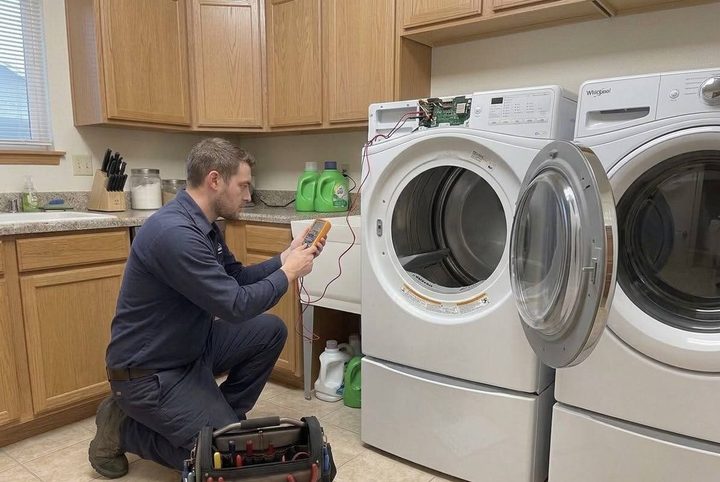
Sunnyland and Columbia hold the city's healthiest repair culture: machines get maintained, faults get addressed at the squeal stage rather than the grind stage, and a sound veteran is understood to be an asset. The bench method gives that culture what it actually needs — numbers. Amp draw says whether the old motor is tired or fine; a resistance reading convicts the element, not the era; and the written figure lets a household decide with evidence instead of nostalgia.
Two-machine visits are the local habit — the kitchen fridge and the garage colleague, the washer and the dryer above it — and the workshop's proximity makes them efficient: one short drive, each machine on its own readings, each figure on its own line. When a part needs ordering, the return trip is measured in days, not weeks, because these streets sit minutes from the bench.
Veterans get metered, not memorializedA thirty-year machine with clean readings is a working machine. The instruments regularly overrule the calendar on these streets — in the machine's favor.
Garage fleets ride alongSecond fridges and chest freezers book into the household's visit as standard practice — same trip, separate readings, separate written lines.
Squeal-stage booking paysThis neighborhood books early and it shows: faults caught at first symptom stay on the cheap half of every figure the bench writes.