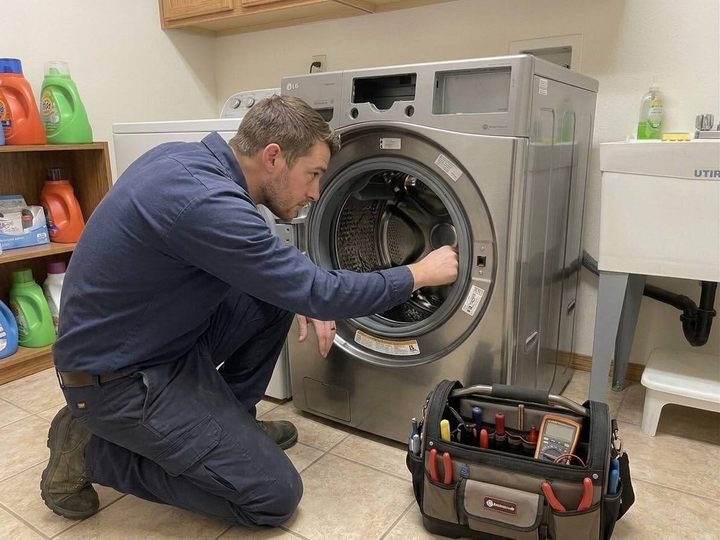
The park's canopy blocks run their own microclimate — shaded, damp, slow to dry — and machines living in it accumulate corrosion at their connectors years ahead of the sunny streets. That fact writes the district's diagnostic order: contacts brightened and retested before any board is suspected, because a furred connector impersonates electronic death flawlessly, and the impersonation dissolves for pocket change while the real thing costs real money.
Beyond the damp, Whatcom Falls runs a classic east-side mix — mid-century houses with serviceable veterans, newer infill with sensor-generation suites, garages holding harvest freezers that work hard from July through hunting season. All of it gets the measured workup: supply proven, fault named by reading, figure written before any part is ordered.
The corrosion test leads herePark-side connectors fur early and fake expensive failures. Brightening and retesting is the district's cheapest verdict — and its most frequent.
Harvest freezers rank as urgentThe garages near the park hold serious provisions. A quiet freezer books with priority and the intake call starts the cold-holding clock immediately.
Both creek banks, one arrangementZIP changes at the creek; nothing else does. Same instruments, same written figures either side.