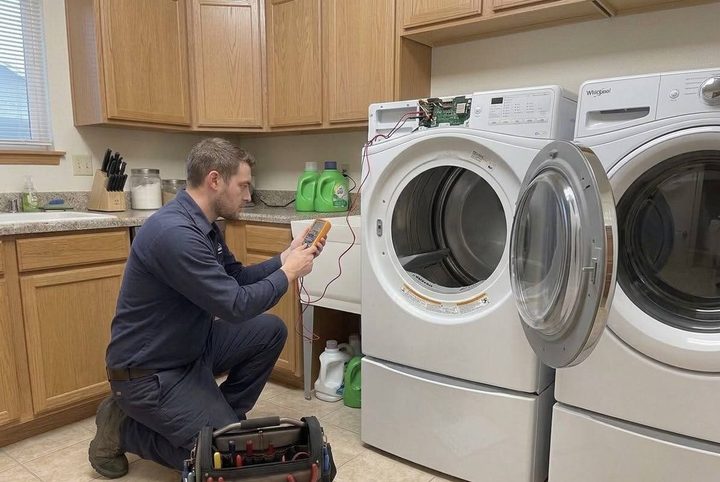
Roosevelt's veterans stay running on purpose, not on luck.
Mid-century blocks keep machines with decades of service left — if somebody measures instead of shrugs. This workshop considers those jobs a specialty, not a nuisance.
$95 service visit · ZIP 98226 · same written-figure arrangement as every street on the book
The neighborhood
How Roosevelt Books, Breaks and Gets Fixed
Roosevelt's housing wears its decades well, and so do a surprising number of its appliances. A range from the eighties or a chest freezer older than its owner isn't a curiosity here — it's Tuesday. The trade has largely given up on these machines; this workshop hasn't, because their construction rewards exactly the kind of measurement-first repair the bench method runs on.
The economics get stated plainly. A veteran machine earns its repair when the fault is honest — a switch, an element, a belt — and earns a frank conversation when it isn't. Either way the verdict arrives with numbers attached: what the readings found, what the labor runs from, what the part costs on its own line, and what the machine's realistic remaining life looks like. The decision stays yours; the arithmetic stays visible.
Original wiring gets measured first
Mid-century circuits can sag under modern loads, and an innocent appliance takes the blame. Supply readings open every Roosevelt visit on principle.
Parts hunts are part of the service
Elements, switches and igniters for the good older nameplates get sourced patiently — the workshop keeps its supplier list long and its promises specific.
Alley access, noted and used
Half of Roosevelt unloads better from the alley than the street. Put it in the booking notes and the van arrives at the right door the first time.
The map pins
Where Exactly the Van Goes in Roosevelt
Streets on the weekly routeJames St, Iron St, Verona St, Texas St and the mid-century grid between Sunset Dr and the creek.
Landmarks we navigate byRoosevelt Park, Memorial Park, the James St corridor — the veteran blocks cluster around all three.
ZIP codes covered98225 on the western blocks, 98226 toward the Sunset side.
From the workshopTen minutes south via James St — Roosevelt calls often pair with Meridian's route day.
Every Roosevelt verdict on an older machine includes a frank read on what's left in it — so the repair-or-retire decision runs on arithmetic, not sentiment or salesmanship.
Supplier lists stay long on purpose
Parts for discontinued nameplates get hunted through channels the big chains dropped years ago. The hunt is quoted honestly — cost and wait — before you commit to it.
Asked around Roosevelt
Neighborhood Questions
Is my old range worth repairing?
If the fault is a serviceable part and the frame is sound, usually yes — and the written figure lets you decide with real numbers instead of nostalgia or pressure.
Can you still find parts for discontinued models?
Often, with patience. The hunt is quoted honestly: what's findable, what it costs, and how long — before you commit to waiting.
Do old machines cost more to diagnose?
No. The service visit is the same $95, and veteran machines frankly give up their secrets faster — they were built to be measured.
A Roosevelt machine acting up?
The route already runs your streets. One call adds your address to it — with a window you can plan around.