From college-block workhorses to view-street front-loaders, the city's washers fail in every dialect there is. The meter translates all of them into the same plain finding.
A citywide washer practice sees the machine population whole. The rentals clustered from the college down through the south neighborhoods run hard-duty machines whose faults arrive early and mechanical — pumps packed with the last tenant's laundry archaeology, suspensions beaten out of true by chronic overload. The settled streets keep long-serving top-loaders whose couplers and clutches are honest bench work. And the newer hillside stock reports in error codes that name a subsystem while carefully withholding the culprit. The bench treats the code as a starting pin, not a diagnosis: live tests on the named circuit, resistance where the table says to look, and the actual failed component identified before any figure exists.
The arrangement holds citywide because it's built for exactly this variety. The labor lands as one written number after the fault is isolated; components print separately and wait for a signature — the owner's, forwarded, when the machine belongs to a rental. And the age conversation happens out loud: a drain pump on a mid-life front-loader is easy money well spent, while a sealed-bearing roar on a machine past its second decade earns an honest sentence about stopping, delivered at the flat visit figure instead of dressed up as a repair.
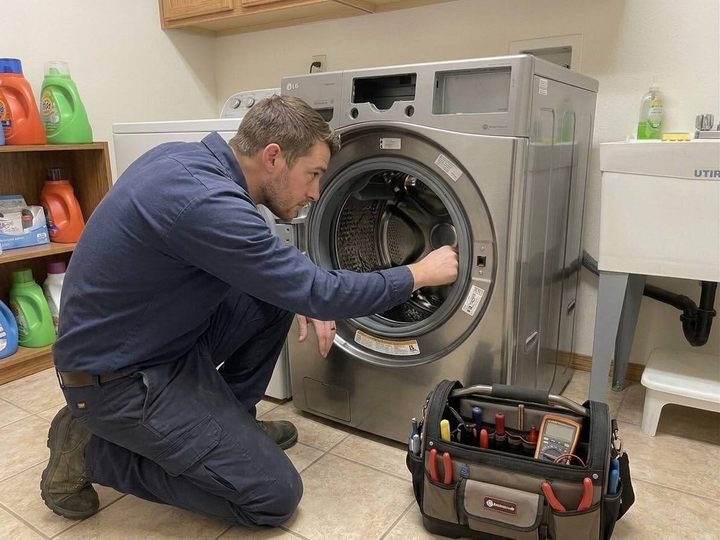
A washer that quits loaded books an early slot from any ZIP: breaker off, door shut, and the water leaves by the pump path before anything else happens — floors stay dry, then the meter goes to work.
A deep slice of Bellingham's washers live in managed housing. The finding and the signed-line component sheet travel to whoever approves the money, formatted so the decision takes minutes.
The quiet citywide risk isn't the machine — it's the supply hose installed two owners ago. Every visit eyeballs them, because a burst hose costs more than any washer ever will.
Regularly: duplex and multiplex machines are part of the city's ordinary caseload, with paperwork built for the building's owner. Coin-operated laundromat fleets are a different trade, said up front.
It saves time, which is the honest version of the same thing. Read it to the workshop when you book and the van arrives with the right service data and probable parts on board.
No line on any figure mentions distance. The whole city rides one arrangement from the E Kellogg Rd workshop — the visit figure and the written labor number read the same in every ZIP.
Book the bench visit — the fault gets isolated by instrument, and the figure arrives in writing.